
 EN
EN



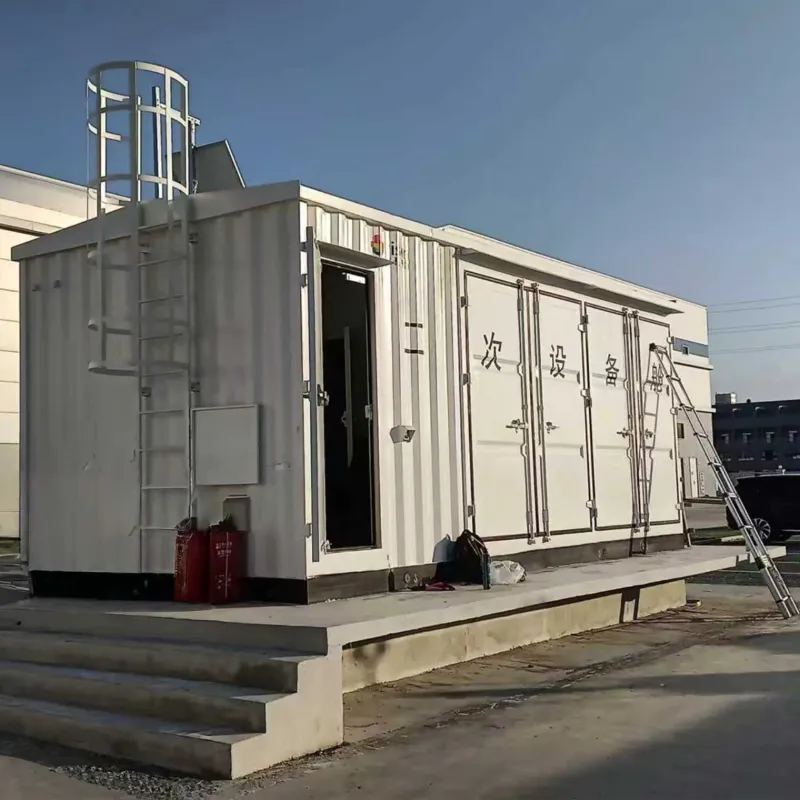
As power grids evolve to meet the demands of distributed energy, industrial expansion, and rapid deployment timelines, the infrastructure supporting electrical systems must evolve alongside them. prefabricated cabins have emerged as a foundational solution in this transformation, offering a factory-built, field-ready enclosure that houses critical electrical equipment with precision and reliability. Their role in modular power infrastructure is not incidental — it is structural, enabling engineers and project managers to plan, deploy, and scale power systems in ways that traditional site-built substations simply cannot match.
Understanding how prefabricated cabins support modular power infrastructure requires looking beyond the physical enclosure itself. These units integrate structural engineering, thermal management, electrical layout, and safety compliance into a single deployable module. When multiple prefabricated cabins are combined or sequenced across a project site, they form a coherent, scalable power backbone that can be commissioned faster, maintained more efficiently, and expanded with far less disruption than conventional alternatives. This article explores the mechanisms, design logic, and practical advantages that make prefabricated cabins central to modern modular power strategies.
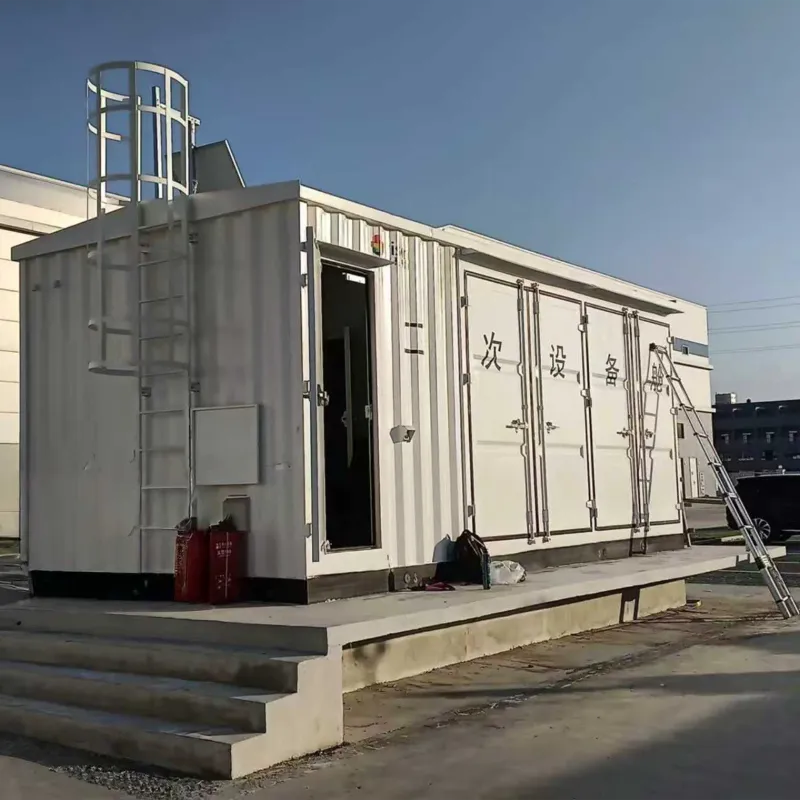
The Modular Power Infrastructure Model and Where Prefabricated Cabins Fit
Defining Modular Power Infrastructure
Modular power infrastructure refers to an approach where electrical systems are designed as discrete, interconnectable units rather than as a single monolithic installation. Each module performs a defined function — transformation, switching, protection, metering, or distribution — and can be deployed, tested, and integrated independently. This philosophy reduces on-site construction complexity, shortens commissioning timelines, and allows power capacity to be added incrementally as demand grows.
The modular model is particularly valuable in contexts where speed, flexibility, and site constraints are critical factors. Data centers, renewable energy farms, mining operations, industrial parks, and urban grid expansion projects all benefit from infrastructure that can be staged and scaled without requiring complete system shutdowns or extensive civil works. Prefabricated cabins are the physical embodiment of this modular logic — each cabin is a self-contained unit that slots into a larger system architecture.
When engineers design a modular power system, they typically define functional blocks first and then specify the enclosures that will house each block. Prefabricated cabins are engineered to match these functional blocks precisely, arriving on site with internal equipment already installed, wired, and tested. This alignment between design intent and physical delivery is what makes prefabricated cabins so effective in modular deployments.
How Prefabricated Cabins Enable System Modularity
Prefabricated cabins enable modularity through standardized interfaces, consistent dimensional footprints, and pre-engineered internal layouts. Because each cabin is manufactured to defined specifications, project teams can plan interconnections, cable routing, and civil foundations in advance without waiting for on-site fabrication to be completed. This predictability is a significant advantage in large-scale or multi-phase projects.
The cabin structure itself supports modularity by providing a controlled environment for sensitive electrical equipment. Switchgear, transformers, protection relays, and monitoring systems all require stable temperature, humidity, and dust conditions to operate reliably. Prefabricated cabins deliver these conditions through integrated HVAC systems, sealed enclosures, and corrosion-resistant materials — ensuring that each module performs consistently regardless of the external environment.
From a project management perspective, prefabricated cabins allow parallel workstreams. While civil foundations are being prepared on site, the cabins are being assembled and tested in the factory. This overlap compresses the overall project schedule significantly, which is a direct operational benefit of the modular approach that prefabricated cabins make possible.
Factory Integration and Pre-Testing as a Structural Advantage
What Happens Inside the Factory Before Deployment
One of the most important ways prefabricated cabins support modular power infrastructure is through the depth of factory integration they undergo before leaving the manufacturing facility. Unlike site-built substations where equipment is installed piece by piece under variable field conditions, prefabricated cabins are assembled in a controlled factory environment where quality standards can be consistently enforced.
Inside the factory, electrical equipment is mounted, wired, and connected according to the project-specific single-line diagram. Bus bars are installed, protection relays are configured, and cable management systems are routed and secured. Thermal management components — including ventilation fans, air conditioning units, and heat exchangers — are integrated and tested for performance under simulated load conditions. The result is a cabin that arrives on site as a fully functional electrical module rather than a collection of components awaiting assembly.
Factory pre-testing is equally critical. High-voltage withstand tests, insulation resistance measurements, functional relay tests, and communication system checks are all performed before the cabin is shipped. This means that when prefabricated cabins are installed on site, the commissioning process is dramatically shortened. Engineers are verifying system integration rather than troubleshooting individual component installations, which reduces both time and risk.
Quality Control Benefits That Translate to Field Reliability
The controlled manufacturing environment of prefabricated cabins produces measurable quality control benefits that translate directly into field reliability. Welding, surface treatment, and structural assembly are performed by specialized teams using calibrated equipment, producing consistent results that are difficult to replicate under outdoor site conditions. This consistency is especially important for the cabin's structural integrity, which must withstand transportation loads, installation stresses, and long-term environmental exposure.
Electrical workmanship quality is also higher in factory conditions. Proper torque values on bus bar connections, correct cable bend radii, and accurate labeling are easier to achieve and verify in a factory setting than on a construction site. These details matter significantly for long-term reliability — loose connections and improper cable management are among the most common causes of electrical failures in field-installed equipment.
For modular power infrastructure, this reliability advantage compounds across the system. When each prefabricated cabin module performs consistently, the overall system behaves predictably. Maintenance teams can develop standardized procedures, spare parts inventories can be rationalized, and fault diagnosis becomes more systematic. The quality embedded in each cabin during manufacturing becomes a system-level reliability asset over the operational life of the installation.
Scalability and Phased Deployment Capabilities
Supporting Incremental Capacity Growth
One of the most commercially significant ways prefabricated cabins support modular power infrastructure is by enabling incremental capacity growth without requiring complete system redesign. In many industrial and commercial projects, the full power demand at project completion is not required from day one. Phased deployment allows operators to commission initial capacity quickly and add modules as demand grows, deferring capital expenditure and reducing financial risk.
Prefabricated cabins are ideally suited to this phased approach because they are designed with future expansion in mind. Spare cable entry points, pre-installed bus bar extension provisions, and standardized interconnection interfaces allow additional cabins to be integrated into an existing installation with minimal disruption. The civil infrastructure — foundations, cable trenches, and access roads — can be designed from the outset to accommodate future modules, making expansion a planned activity rather than an emergency retrofit.
This scalability is particularly valuable in renewable energy applications, where generation capacity is often added in stages as financing is secured and grid connection agreements are finalized. A wind or solar farm that begins with a single prefabricated cabin substation can expand to multiple interconnected cabin modules as the project grows, maintaining consistent design standards and operational procedures throughout the expansion process.
Redeployment and Relocation Flexibility
Beyond incremental expansion, prefabricated cabins offer a redeployment flexibility that is unique among power infrastructure options. Because they are self-contained structural units, prefabricated cabins can be disconnected, transported, and reinstalled at a different location when project requirements change. This is a significant advantage in temporary or semi-permanent applications such as construction power supply, mining operations, and emergency grid restoration.
The ability to redeploy prefabricated cabins means that the capital investment in the cabin and its internal equipment is not permanently tied to a single site. Organizations that manage multiple projects or facilities can treat prefabricated cabins as mobile infrastructure assets, allocating them to where they are most needed and recovering them when a project concludes. This asset mobility changes the economics of power infrastructure investment in ways that favor the modular approach.
Redeployment also supports business continuity planning. Organizations that maintain spare prefabricated cabins in inventory can respond rapidly to equipment failures or unexpected capacity demands by deploying a replacement module while the original unit is repaired. This operational resilience is difficult to achieve with site-built infrastructure and represents a meaningful advantage for organizations where power availability is critical to operations.
Environmental Adaptability and Site Suitability
Designing Prefabricated Cabins for Diverse Operating Environments
Modular power infrastructure is deployed across an enormous range of environments — from arctic industrial sites to tropical coastal installations, from high-altitude wind farms to urban underground substations. Prefabricated cabins are engineered to perform reliably across this diversity of conditions, with design variants tailored to specific environmental challenges. This adaptability is a core reason why prefabricated cabins have become the preferred enclosure solution for modular power systems globally.
For high-temperature or high-humidity environments, prefabricated cabins incorporate enhanced HVAC systems, anti-condensation heaters, and corrosion-resistant surface treatments. For cold climates, insulation packages, low-temperature lubricants, and cold-weather starting systems for HVAC equipment are specified. For coastal or offshore applications, stainless steel hardware, marine-grade coatings, and sealed cable entry systems protect against salt spray and moisture ingress. Each of these adaptations is engineered into the cabin during manufacturing, ensuring that the deployed module is fully suited to its operating environment from day one.
The structural design of prefabricated cabins also addresses site-specific challenges. Seismic zones require cabins with reinforced frames and equipment mounting systems designed to withstand ground motion. High-wind regions require aerodynamic profiles and anchor systems that resist uplift forces. Flood-prone areas require elevated floor designs and sealed lower sections that prevent water ingress. These structural adaptations are specified during the design phase and built into the cabin, eliminating the need for costly field modifications after installation.
Minimizing Civil Works and Site Preparation Requirements
A practical advantage of prefabricated cabins in modular power infrastructure is their ability to minimize civil works requirements. Traditional site-built substations require extensive concrete structures, cable trenching, equipment foundations, and weatherproofing works that consume significant time and resources. Prefabricated cabins reduce this civil scope dramatically — typically requiring only a prepared foundation pad, cable entry provisions, and access road improvements.
This reduction in civil works has cascading benefits for project schedules and costs. Civil construction is often the longest-lead activity on a power infrastructure project, and any reduction in its scope directly shortens the critical path. For projects in remote locations where construction materials and skilled labor are expensive to mobilize, minimizing civil works also reduces project costs substantially. Prefabricated cabins effectively transfer construction work from the field to the factory, where it can be performed more efficiently and at lower cost.
The reduced civil footprint of prefabricated cabins also makes them suitable for sites where extensive ground disturbance is undesirable or restricted. Environmental protection zones, urban infill sites, and locations with complex underground utilities all benefit from the minimal excavation and construction activity that prefabricated cabins require. This site suitability advantage expands the range of locations where modular power infrastructure can be deployed effectively.
Operational and Maintenance Advantages in Modular Systems
Standardization as a Maintenance Efficiency Driver
When modular power infrastructure is built around prefabricated cabins, the standardization inherent in the cabin design creates significant maintenance efficiency advantages. Because each cabin of a given type shares the same internal layout, equipment configuration, and access provisions, maintenance technicians can develop familiarity with the system quickly and apply consistent procedures across all modules. This standardization reduces training requirements, minimizes the risk of maintenance errors, and supports the development of efficient preventive maintenance programs.
Spare parts management is also simplified when prefabricated cabins are used consistently across a system or portfolio of projects. A standardized cabin design means that a single inventory of critical spare parts — contactors, relays, fuses, HVAC components — can support multiple installations. This consolidation reduces inventory carrying costs and ensures that replacement parts are available when needed, supporting rapid fault resolution and minimizing downtime.
Documentation and asset management are similarly streamlined. Because prefabricated cabins are manufactured to defined specifications with comprehensive factory documentation, the as-built records for each module are accurate and complete from the moment of installation. This documentation quality supports effective lifecycle management, regulatory compliance, and future modification planning throughout the operational life of the installation.
Remote Monitoring and Smart Integration Capabilities
Modern prefabricated cabins are increasingly designed to support remote monitoring and smart grid integration, extending their value in modular power infrastructure beyond physical containment. Integrated communication systems, environmental sensors, and power quality monitoring equipment can be factory-installed in prefabricated cabins, enabling real-time visibility into the operating status of each module from a central control location.
This remote monitoring capability is particularly valuable in distributed modular systems where physical access to individual cabins may be infrequent or logistically challenging. Operators can monitor temperature, humidity, equipment status, and power parameters continuously, receiving alerts when conditions deviate from normal ranges. Predictive maintenance algorithms can analyze trend data to identify developing faults before they cause failures, allowing maintenance interventions to be planned and executed efficiently.
The smart integration capabilities of prefabricated cabins also support the broader digitalization of power infrastructure. As utilities and industrial operators invest in digital grid management systems, the ability to connect individual cabin modules to these platforms through standardized communication protocols becomes increasingly important. Prefabricated cabins that are designed with this connectivity in mind from the outset provide a more capable and future-ready foundation for modular power infrastructure than enclosures that treat communication as an afterthought.
FAQ
What types of electrical equipment are typically housed inside prefabricated cabins?
Prefabricated cabins are used to house a wide range of electrical equipment depending on the application. Common configurations include medium-voltage switchgear, power transformers, low-voltage distribution boards, protection and control panels, metering equipment, and battery energy storage systems. In GIS (gas-insulated switchgear) applications, prefabricated cabins provide the controlled environment that SF6 or clean-air insulated equipment requires. The internal layout is customized to the specific equipment configuration during the factory manufacturing process.
How long does it typically take to install prefabricated cabins on site compared to site-built substations?
Installation timelines for prefabricated cabins are significantly shorter than for site-built substations. A single prefabricated cabin can typically be installed and commissioned within days of arriving on site, compared to weeks or months for equivalent site-built infrastructure. The time savings come from the factory pre-assembly and pre-testing that eliminates most on-site construction and wiring work. For multi-module modular systems, the parallel manufacturing and site preparation workstreams further compress the overall project schedule.
Can prefabricated cabins be customized for specific project requirements?
Yes, prefabricated cabins are highly customizable within the constraints of the manufacturing process. Dimensions, structural materials, thermal management systems, internal equipment layouts, cable entry configurations, and external finishes can all be specified to match project requirements. Manufacturers typically work from customer-provided single-line diagrams and equipment specifications to produce a cabin that meets the exact functional and environmental requirements of the application. Standardized base designs are often used as starting points, with project-specific modifications applied during the engineering phase.
Are prefabricated cabins suitable for permanent installations or only temporary use?
Prefabricated cabins are fully suitable for permanent installations and are widely used as the primary substation enclosure in long-term power infrastructure projects. Their structural design, material specifications, and equipment integration standards are equivalent to those of site-built substations, and they are designed for operational lifespans of 25 years or more with appropriate maintenance. The redeployment capability of prefabricated cabins is an additional option rather than a limitation — it provides flexibility that permanent site-built structures cannot offer, without compromising the durability and reliability required for permanent service.
Table of Contents
- The Modular Power Infrastructure Model and Where Prefabricated Cabins Fit
- Factory Integration and Pre-Testing as a Structural Advantage
- Scalability and Phased Deployment Capabilities
- Environmental Adaptability and Site Suitability
- Operational and Maintenance Advantages in Modular Systems
-
FAQ
- What types of electrical equipment are typically housed inside prefabricated cabins?
- How long does it typically take to install prefabricated cabins on site compared to site-built substations?
- Can prefabricated cabins be customized for specific project requirements?
- Are prefabricated cabins suitable for permanent installations or only temporary use?