
 EN
EN



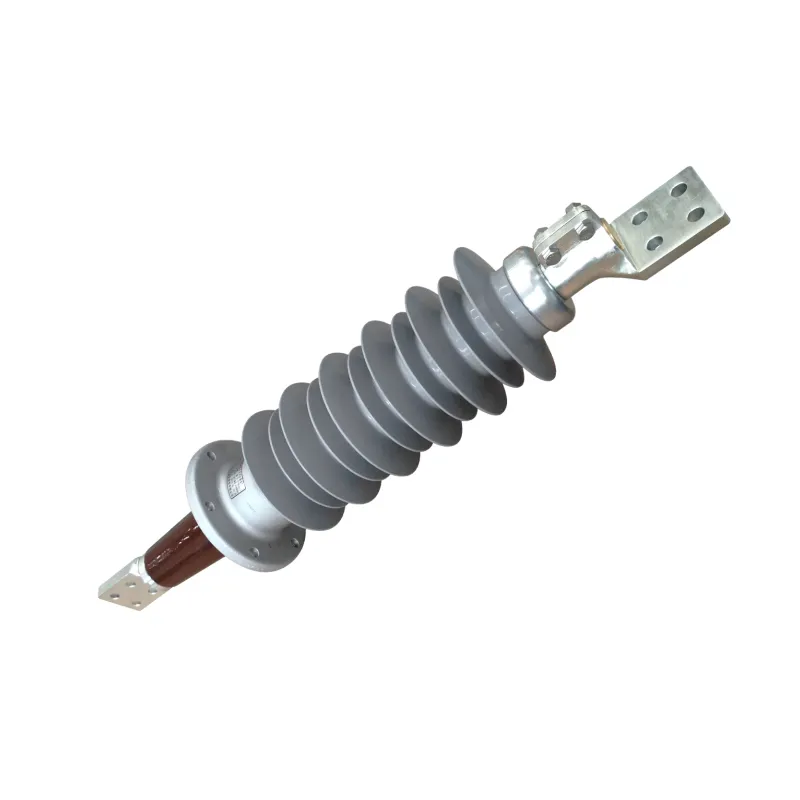
Before a power transformer reaches the substation, every one of its components must meet strict performance and safety criteria. Among the most critical components are transformer bushings, which serve as the insulated conduits allowing high-voltage conductors to pass safely through transformer tanks or walls. Because these components operate under extreme electrical stress, mechanical load, and environmental exposure, manufacturers invest heavily in structured pre-delivery testing to verify that each unit performs reliably once installed in the field.
Understanding how manufacturers test transformer bushings before delivery is not merely an academic exercise. For procurement engineers, asset managers, and utility operators, this knowledge helps evaluate supplier quality systems, interpret factory acceptance test reports, and make informed decisions about the long-term reliability of the equipment entering their networks. This article walks through the full testing workflow that reputable manufacturers follow — from initial visual inspection to high-voltage dielectric verification and final documentation.
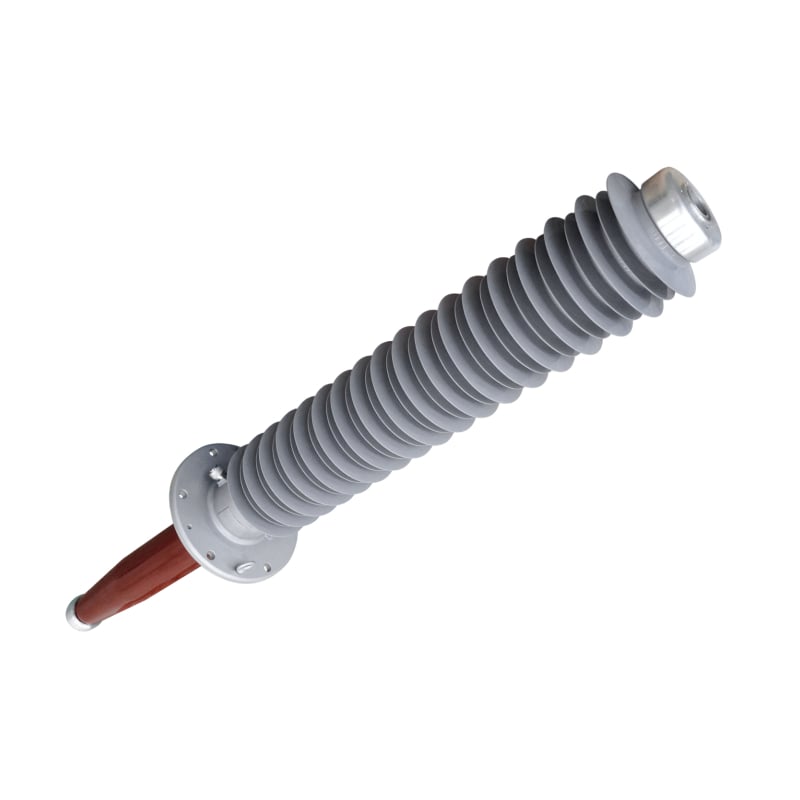
The Purpose of Pre-Delivery Testing for Transformer Bushings
Why Testing Cannot Be Skipped
Transformer bushings are subjected to combined mechanical and electrical stresses throughout their service life. A single defect — whether a microscopic void in the insulation, a misaligned conductor tube, or an improperly sealed flange — can lead to partial discharge, dielectric breakdown, or catastrophic failure. Pre-delivery testing is the last opportunity a manufacturer has to catch such defects before the product leaves the factory.
Failures in the field are far more costly than failures caught in the test bay. A bushing that fails during operation can cause transformer explosion, extended outages, and significant financial liability. This is precisely why international standards such as IEC 60137 and IEEE C57.19 mandate specific test sequences for transformer bushings depending on their voltage class and application.
Manufacturers who rigorously apply these test protocols provide buyers with evidence-based assurance, not just a product warranty on paper. For buyers sourcing transformer bushings for critical grid infrastructure, the test report is as important as the physical product itself.
Routine Tests vs. Type Tests
Testing of transformer bushings is generally divided into two categories: routine tests and type tests. Routine tests are performed on every individual unit produced and verify that each bushing meets the electrical and mechanical specifications stated for that series. Type tests, by contrast, are performed once on a representative design to prove that the design itself meets the applicable standard under the most demanding conditions.
For buyers evaluating a supplier, it is important to verify that type test certificates exist for the specific design being purchased, and that routine test reports are generated for each individual bushing in the delivery batch. These two categories of documentation together form the complete quality assurance record for transformer bushings.
Visual and Dimensional Inspection
Surface and Assembly Verification
Every testing sequence for transformer bushings begins with a thorough visual inspection. Inspectors examine the porcelain or polymer shed profile for cracks, chips, surface contamination, and glaze irregularities. The metal flange and mounting hardware are checked for corrosion, dimensional accuracy, and thread integrity. Any visible defect at this stage is cause for rejection or rework before electrical testing proceeds.
For oil-impregnated paper (OIP) and resin-impregnated paper (RIP) transformer bushings, the inspection also includes verifying the oil level or resin fill condition, checking the integrity of expansion chambers, and confirming that all seals and gaskets are correctly installed. These physical details directly affect the long-term performance of transformer bushings in service.
Dimensional Tolerances and Fit Checks
Dimensional accuracy is critical for transformer bushings because incorrect mounting dimensions can create mechanical stress at the interface with the transformer tank, leading to seal failures or flange cracking. Manufacturers use calibrated gauges to verify that the creepage distance, dry arcing distance, conductor tube dimensions, and flange bolt circle diameter all fall within the tolerances specified in the design drawings.
For high-voltage transformer bushings intended for use in sealed transformer tanks, the sealing performance of the mounting flange is also validated under a pressure test to confirm that no leakage path exists. This level of dimensional checking ensures that transformer bushings will integrate seamlessly with the equipment they are designed to serve.
Electrical and Dielectric Testing Procedures
Power Frequency Voltage Withstand Test
The power frequency voltage withstand test — also called the applied voltage test — is one of the core routine tests for all transformer bushings. During this test, the bushing is subjected to a high AC voltage between its conductor and its flange for a defined duration, typically one minute, at a level well above the rated operating voltage. The bushing must withstand this stress without breakdown or flashover.
This test verifies the integrity of the primary insulation in transformer bushings under conditions that simulate the most severe voltage transients likely to occur during service. Any weakness in the insulation system — such as contamination, voids, or delamination — will result in a failure during this test, which is exactly the point. Catching these defects in the factory prevents them from manifesting as dangerous failures in the field.
Capacitance and Dissipation Factor Measurement
For capacitively graded transformer bushings — the type most commonly used at high and extra-high voltages — measurement of capacitance (C1) and dissipation factor (tan delta) is a mandatory routine test. The dissipation factor, often referred to as the power factor, indicates the dielectric losses within the insulation system. Elevated tan delta values suggest the presence of moisture, contamination, or aging in the insulation.
Manufacturers measure these values at the factory and compare them against the design baseline established during type testing. Transformer bushings with tan delta values outside the accepted tolerance are rejected. Because these measurements are extremely sensitive and reproducible, they serve as a powerful fingerprint of the insulation condition. Many utilities also use tan delta measurements as part of their in-service maintenance programs to track insulation aging over time.
Partial Discharge Testing
Partial discharge (PD) testing is one of the most sensitive electrical tests applied to transformer bushings. It detects small electrical discharges that occur within voids, interfaces, or contaminated regions inside the insulation before a complete breakdown occurs. These discharges, while not immediately catastrophic, cause progressive insulation degradation over time and are early indicators of latent defects.
During the test, the bushing is energized to a specified voltage level and the apparent charge measured in picocoulombs (pC) must remain below the limit specified in the applicable standard. For transformer bushings intended for high-voltage applications, IEC 60137 specifies very tight partial discharge limits. The absence of detectable partial discharge activity is a strong quality indicator that the insulation system is free from harmful voids or contaminants.
Thermal and Mechanical Performance Verification
Temperature Rise Testing
Transformer bushings carry continuous load current throughout their service life, and resistive heating within the conductor assembly can raise temperatures to levels that may degrade surrounding insulation if the design is not properly optimized. Temperature rise testing verifies that the bushing conductor assembly generates an acceptable level of heat under rated current conditions.
This test is typically performed as a type test rather than a routine test, but the results establish the thermal performance baseline for all units of that design. Manufacturers use the temperature rise test results to confirm that the conductor cross-section, contact resistance, and thermal coupling between the conductor and the surrounding insulation are all within safe limits for transformer bushings operating at their rated current.
Bending Moment and Cantilever Load Tests
In outdoor applications, transformer bushings must withstand mechanical forces imposed by wind loads, ice accumulation, and the weight of connected bus conductors. The bending moment or cantilever load test evaluates the mechanical strength of the bushing under these conditions. A controlled lateral load is applied at a specified distance from the flange while the bushing is inspected for cracking, permanent deformation, or flange seal failure.
For transformer bushings intended for use in seismic zones or high-wind regions, manufacturers may also perform seismic qualification testing or higher cantilever load tests to confirm suitability for those environments. These mechanical validations are an often-overlooked but important part of the complete quality assurance picture for transformer bushings.
Documentation, Traceability, and Factory Acceptance
Test Report Structure and Traceability
A complete factory test program for transformer bushings generates a set of documented results that form the basis of the factory acceptance test (FAT) report. This report typically includes the serial number of each bushing, the test methods applied, the measured values, the acceptance criteria from the applicable standard, and a pass or fail determination for each test. Properly structured test reports allow buyers to trace each bushing unit back to its specific production batch and test results.
Reputable manufacturers of transformer bushings maintain calibration records for all test equipment used in the process and retain test records for extended periods — often the full expected service life of the product. This traceability is increasingly required by utilities and industrial buyers as part of their own quality management systems and regulatory compliance obligations.
Third-Party Witness Testing
For large orders or critical applications, buyers may request that an independent third-party inspector witness the factory acceptance tests for transformer bushings. This practice adds an additional layer of confidence that the tests were performed correctly, the equipment was properly calibrated, and the results accurately reflect the condition of the delivered product.
Manufacturers who welcome third-party witness testing demonstrate a high degree of transparency and confidence in their own quality processes. When evaluating suppliers of transformer bushings, asking about the availability and logistics of witness testing is a useful screening question that quickly reveals the maturity of a supplier's quality management approach.
FAQ
What standards govern the testing of transformer bushings before delivery?
The primary international standards governing the testing of transformer bushings are IEC 60137 and IEEE C57.19. These standards define the routine tests, type tests, and special tests applicable to transformer bushings at various voltage levels, as well as the acceptance criteria for each test. Buyers should request test reports that explicitly reference compliance with one or both of these standards depending on the market and application.
Is partial discharge testing performed on every transformer bushing unit produced?
Yes, partial discharge testing is generally a mandatory routine test for capacitively graded transformer bushings at medium and high voltage levels, meaning it is performed on every individual unit. For lower-voltage or solid insulation designs, it may be applied selectively or as a type test only. Buyers should confirm with their supplier which tests are applied as routine tests for the specific type of transformer bushings being purchased.
How should buyers interpret the dissipation factor results in a bushing test report?
The dissipation factor (tan delta) result for transformer bushings should be compared against both the acceptance limit specified in the applicable standard and the design baseline value established during type testing. A value close to the acceptance limit may still pass the test but could indicate a bushing that has less insulation margin than a unit with a much lower value. Buyers who want additional confidence can request that the measured values be well below the limit rather than simply within it.
Can transformer bushings be tested again after long-term storage before installation?
Yes, it is good practice to perform re-commissioning tests on transformer bushings that have been stored for extended periods before installation, particularly capacitance and dissipation factor measurements. Long storage periods, especially in humid or contaminated environments, can affect the insulation condition of transformer bushings. A re-test before installation confirms that the insulation quality has been maintained and that the bushings remain fit for service.
Table of Contents
- The Purpose of Pre-Delivery Testing for Transformer Bushings
- Visual and Dimensional Inspection
- Electrical and Dielectric Testing Procedures
- Thermal and Mechanical Performance Verification
- Documentation, Traceability, and Factory Acceptance
-
FAQ
- What standards govern the testing of transformer bushings before delivery?
- Is partial discharge testing performed on every transformer bushing unit produced?
- How should buyers interpret the dissipation factor results in a bushing test report?
- Can transformer bushings be tested again after long-term storage before installation?