
 EN
EN



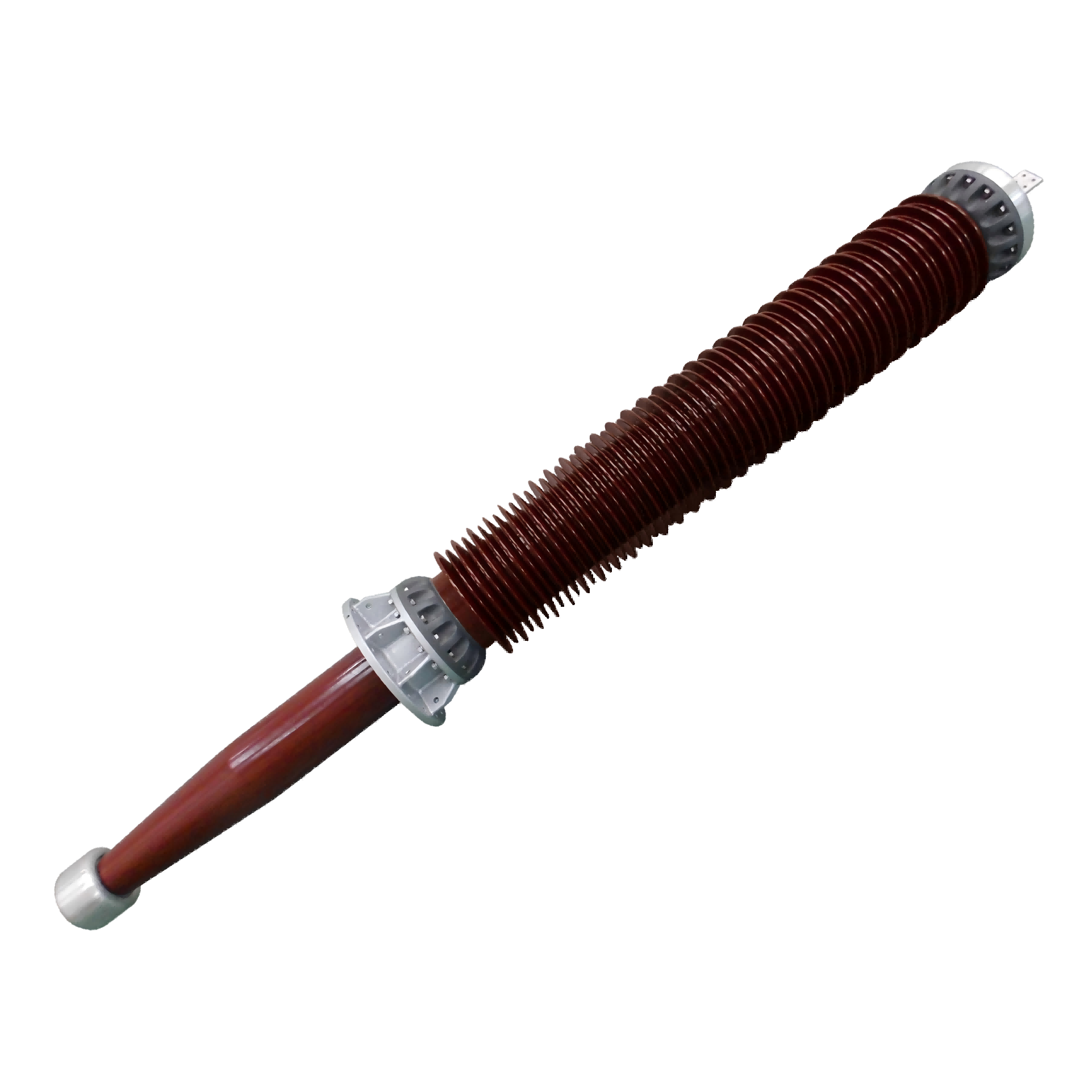
In high-voltage power systems, the transformer bushing is one of the most structurally and electrically critical components in the entire assembly. It serves as the insulated conductor that passes high-voltage current through the grounded tank wall of a transformer, and any compromise in its manufacturing quality can lead to catastrophic field failures. For engineers, procurement specialists, and utility operators who depend on long-term grid reliability, understanding what production processes define a well-made transformer bushing is not just academic — it is a practical necessity for making sound sourcing and specification decisions.
The production of a transformer bushing involves a carefully sequenced series of manufacturing steps, each of which directly influences the component's dielectric strength, thermal performance, mechanical integrity, and service life. From raw material selection through final testing, every stage carries weight. This article examines the key production processes that matter most for transformer bushing manufacturers, explaining why each step exists, what it achieves, and how it contributes to the overall quality of the finished product.
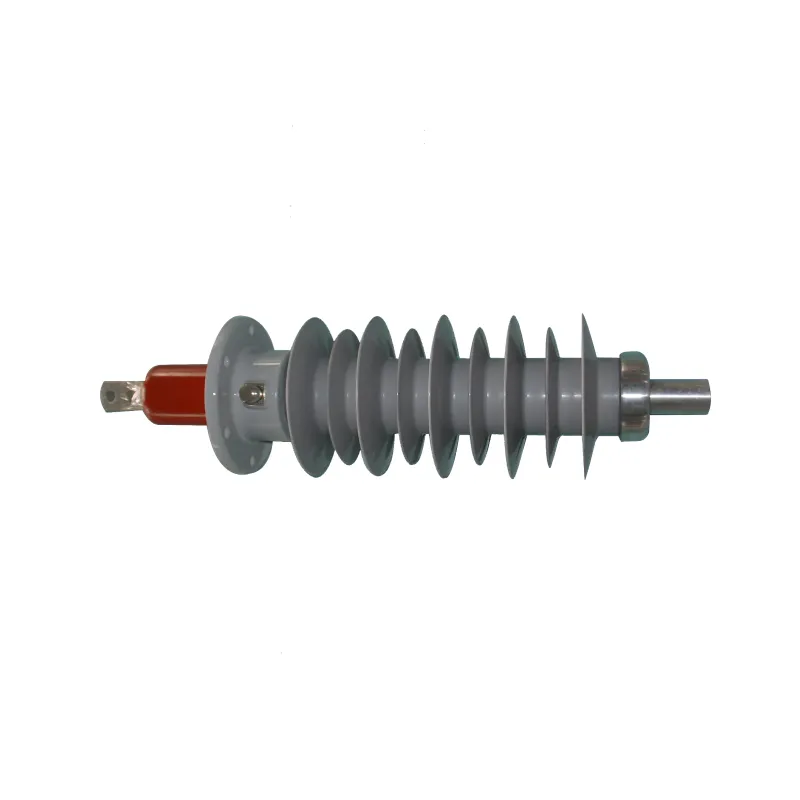
Raw Material Selection and Preparation
Insulating Material Quality as a Foundation
The performance of any transformer bushing begins with the materials chosen for its insulating body. Oil-impregnated paper, resin-bonded paper, and cast resin are among the most commonly used insulating media, and each requires strict incoming quality control before production begins. The dielectric properties of these materials — including permittivity, dissipation factor, and breakdown voltage — must meet defined specifications before they are accepted into the production line.
For paper-based transformer bushing designs, the kraft paper used in winding must be free of moisture, contaminants, and mechanical defects. Even trace levels of moisture in the paper can dramatically reduce the dielectric strength of the finished component. Manufacturers that invest in controlled-environment storage and rigorous incoming inspection at this stage are setting a quality baseline that carries through every subsequent process.
Conductor materials, typically aluminum or copper, must also meet dimensional tolerances and surface finish requirements. A rough or oxidized conductor surface can create localized electric field concentrations that accelerate insulation degradation over time. Proper surface preparation of the conductor before winding or casting is therefore a non-negotiable step in responsible transformer bushing production.
Flange and Hardware Component Preparation
The metallic flange and mounting hardware of a transformer bushing must be machined to precise dimensional tolerances to ensure proper sealing and mechanical fit during installation. Flanges are typically made from cast iron, aluminum alloy, or stainless steel, and their sealing surfaces must be finished to a smoothness that allows reliable gasket compression without leakage.
Corrosion protection is another preparation concern. Flanges and hardware components that will be exposed to outdoor environments or oil-immersed conditions require appropriate surface treatments such as hot-dip galvanizing, epoxy coating, or anodizing. Manufacturers who treat hardware preparation as a secondary concern often find that field failures originate not in the insulating body but in corroded or improperly sealed metallic components.
Capacitive Grading and Winding Processes
The Role of Capacitive Grading in High-Voltage Designs
For medium- and high-voltage transformer bushing designs, capacitive grading is one of the most technically demanding production processes. The purpose of capacitive grading is to distribute the electric field uniformly along the length of the insulating body, preventing dangerous field concentrations at the conductor end or the flange region. This is achieved by embedding conductive foil layers at precisely calculated radial positions within the insulating winding.
The accuracy of foil placement during winding is critical. Even small deviations from the designed foil geometry can distort the intended field distribution, creating weak zones that are invisible to visual inspection but detectable only through electrical testing. Manufacturers with strong process control in this area use precision winding machines with real-time tension and position monitoring to ensure that each foil layer is placed exactly as designed.
The number of grading layers, their axial length, and their radial spacing are all determined by the voltage class of the transformer bushing. Higher voltage ratings demand more layers and tighter tolerances. This is why the winding process for a 500 kV transformer bushing is fundamentally more complex and quality-sensitive than that for a 35 kV unit, even though the basic principle is the same.
Winding Tension and Layer Consistency
Beyond foil placement, the mechanical consistency of the paper winding itself matters greatly. Uneven winding tension can create voids or density variations within the insulating body, which become sites for partial discharge activity under operating voltage. Partial discharge is a slow but destructive process that erodes insulation over time and is a leading cause of transformer bushing failure in service.
Manufacturers who control winding tension through automated systems and verify layer density through intermediate inspection steps produce transformer bushing components with more uniform dielectric properties. This consistency translates directly into more predictable and reliable performance in the field, which is why winding process discipline is a meaningful differentiator among manufacturers.
Drying, Impregnation, and Curing
Moisture Removal Through Controlled Drying
After winding, the insulating body of an oil-impregnated paper transformer bushing must undergo a thorough drying process to remove residual moisture from the paper. This is typically accomplished through vapor-phase drying or hot-oil circulation drying under vacuum conditions. The goal is to reduce moisture content to levels well below 0.5%, as even small amounts of retained moisture significantly reduce dielectric strength and increase the dissipation factor of the finished transformer bushing.
The drying cycle must be carefully controlled in terms of temperature, vacuum level, and duration. Insufficient drying leaves moisture in the paper, while excessive temperature can degrade the paper fibers themselves. Manufacturers with validated drying protocols and continuous monitoring of process parameters are better positioned to achieve consistent moisture removal across production batches.
Oil Impregnation Under Vacuum
Following drying, the wound insulating body is impregnated with transformer oil under vacuum. The vacuum impregnation process ensures that oil penetrates fully into the paper structure, displacing any remaining air and filling all microscopic voids. Air pockets within the insulation are highly problematic because air has a much lower dielectric strength than oil-impregnated paper, making void-containing regions the first to experience partial discharge under voltage stress.
The quality of the impregnating oil is also a process variable that responsible transformer bushing manufacturers control carefully. The oil must meet specifications for dielectric strength, moisture content, acidity, and gas content before it is used in impregnation. Using degraded or contaminated oil at this stage would undermine all the quality work done in earlier production steps.
For resin-cast transformer bushing designs, the curing process replaces oil impregnation as the consolidation step. Resin mixing ratios, casting temperature, and cure cycle duration all influence the final mechanical and dielectric properties of the cast body. Voids in cast resin, like air pockets in oil-paper insulation, are initiation sites for partial discharge and must be minimized through proper degassing and controlled casting procedures.
Assembly, Sealing, and Dimensional Verification
Precision Assembly of Mechanical Components
Once the insulating body is prepared, the transformer bushing is assembled with its conductor, flange, oil expansion chamber, and terminal hardware. This assembly process requires careful torque control on fasteners, proper gasket seating, and verification that all mating surfaces are clean and undamaged. Improper assembly can introduce mechanical stress into the insulating body or create leak paths that allow moisture ingress during service.
The oil expansion chamber, present in oil-filled transformer bushing designs, must be correctly filled and sealed to allow for thermal expansion of the oil without creating pressure differentials that could compromise seals. Manufacturers who use standardized assembly procedures with documented torque values and inspection checkpoints reduce the risk of assembly-related defects that would only become apparent after installation.
Dimensional and Visual Inspection
Before electrical testing, each transformer bushing undergoes dimensional verification to confirm that critical measurements — including overall length, flange bolt circle diameter, conductor projection, and creepage distance — conform to the applicable standard or customer specification. Creepage distance is particularly important for outdoor transformer bushing applications, where surface contamination from pollution, salt, or industrial deposits can create leakage current paths along the insulator surface.
Visual inspection at this stage checks for surface cracks, chips, glaze defects in porcelain designs, or surface irregularities in composite designs. Any surface defect on a transformer bushing can become a focal point for corona discharge or tracking under wet and contaminated conditions, so this inspection step is not merely cosmetic — it is a functional quality gate.
Electrical Testing and Quality Validation
Routine and Type Tests for Every Transformer Bushing
Electrical testing is the final and most definitive quality validation step in transformer bushing production. Routine tests, performed on every unit, typically include power frequency withstand voltage testing, partial discharge measurement, and capacitance and dissipation factor measurement. These tests verify that the transformer bushing meets its rated dielectric performance and that no manufacturing defects are present that would cause premature failure.
Partial discharge testing is especially revealing because it can detect voids, delaminations, or contamination within the insulating body that are invisible to all other inspection methods. A transformer bushing that passes partial discharge testing at the specified voltage level has demonstrated that its insulation system is free of the types of defects most likely to cause in-service failure. Manufacturers who invest in sensitive partial discharge measurement equipment and well-shielded test environments are able to detect and reject marginal units that less capable test setups would pass.
Type Testing and Long-Term Validation
Beyond routine tests, type tests are conducted on representative samples to validate the design of a transformer bushing for a given voltage class and application. Type tests may include lightning impulse withstand, switching impulse withstand, thermal stability testing, and seismic qualification depending on the applicable standard and customer requirements. These tests are not repeated for every unit but must be on record to demonstrate that the design has been validated.
Manufacturers who maintain comprehensive type test records and can provide test reports from accredited laboratories give buyers a much stronger basis for confidence in the transformer bushing they are purchasing. The absence of type test documentation is a meaningful red flag in any procurement evaluation, regardless of how competitive the price may appear.
FAQ
Why does the winding process have such a large impact on transformer bushing quality?
The winding process determines the internal geometry of the insulating body, including the placement of capacitive grading foils and the density of the paper layers. Errors in winding create field distribution anomalies and void sites that lead to partial discharge and eventual dielectric failure. Because these defects are internal, they cannot be corrected after winding is complete, making process control at this stage especially critical for transformer bushing reliability.
What is the significance of partial discharge testing for a transformer bushing?
Partial discharge testing detects internal voids, delaminations, and contamination within the insulating body of a transformer bushing that no other inspection method can identify. Even small levels of partial discharge activity indicate the presence of defects that will grow under operating voltage and eventually cause insulation breakdown. Passing partial discharge testing at the specified level is therefore one of the strongest indicators of manufacturing quality for any transformer bushing.
How does moisture affect the performance of an oil-impregnated paper transformer bushing?
Moisture in the paper insulation of a transformer bushing significantly reduces dielectric strength and increases the dissipation factor, both of which accelerate insulation aging under operating conditions. Even moisture levels that appear small in absolute terms can have a disproportionate effect on long-term reliability. This is why the drying and vacuum impregnation steps in transformer bushing production are so carefully controlled by quality-focused manufacturers.
What should buyers look for when evaluating transformer bushing manufacturers on process quality?
Buyers should ask about process controls at the winding, drying, impregnation, and testing stages. Specifically, they should request evidence of validated drying protocols, partial discharge test capabilities, and type test documentation from accredited laboratories. A manufacturer that can provide detailed process documentation and traceable test records for each transformer bushing demonstrates a level of quality discipline that is directly predictive of field performance.
Table of Contents
- Raw Material Selection and Preparation
- Capacitive Grading and Winding Processes
- Drying, Impregnation, and Curing
- Assembly, Sealing, and Dimensional Verification
- Electrical Testing and Quality Validation
-
FAQ
- Why does the winding process have such a large impact on transformer bushing quality?
- What is the significance of partial discharge testing for a transformer bushing?
- How does moisture affect the performance of an oil-impregnated paper transformer bushing?
- What should buyers look for when evaluating transformer bushing manufacturers on process quality?