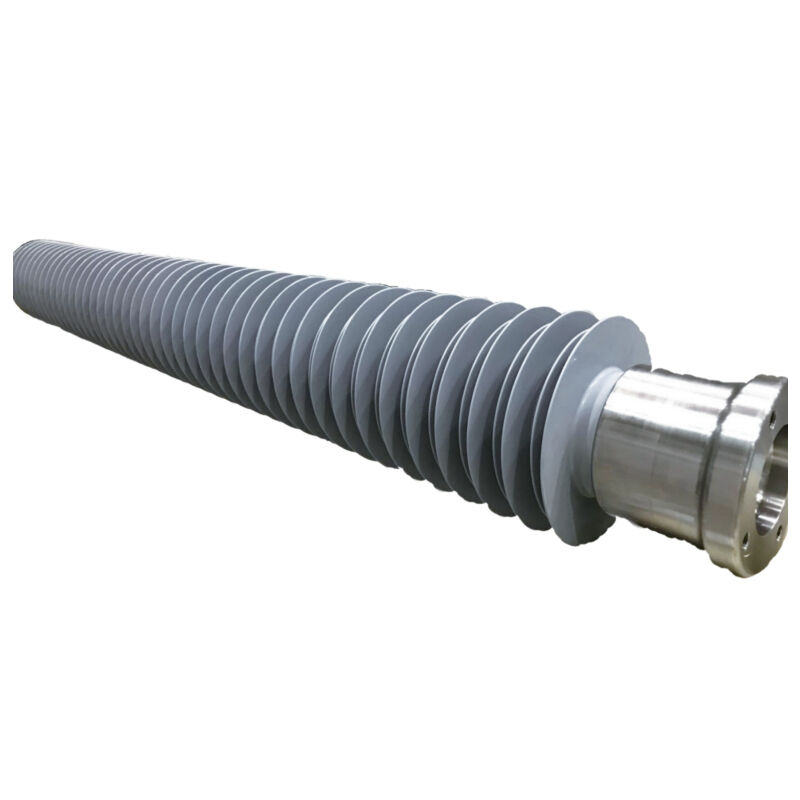
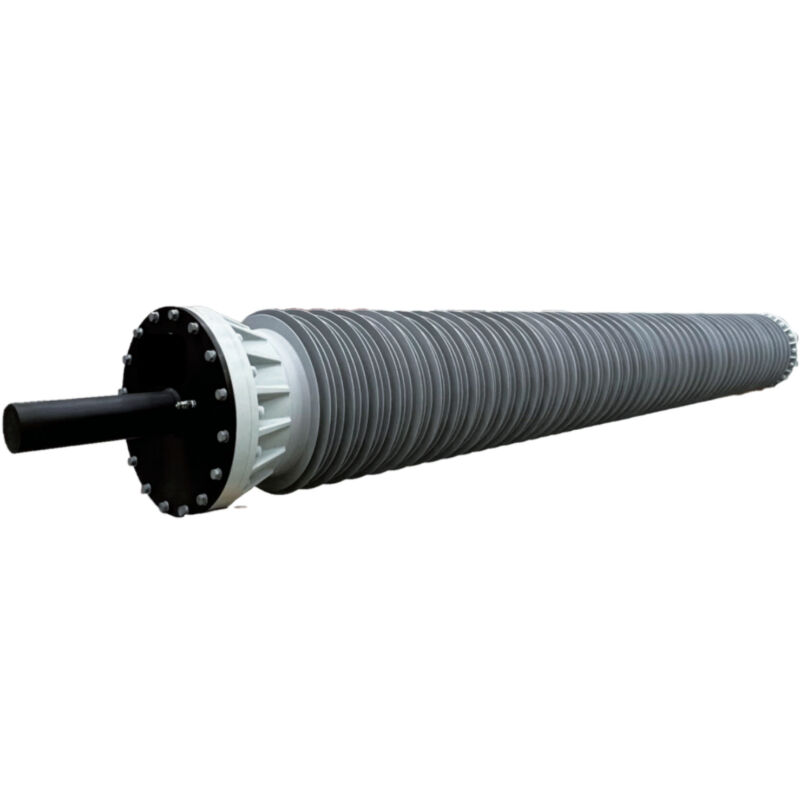
Composite Hollow Core Insulators - Advanced Electrical Insulation Solutions for Power Systems

Get a Free Quote

Our representative will contact you soon.
Email
Name
Company Name
Message
0/1000

composite hollow core insulators

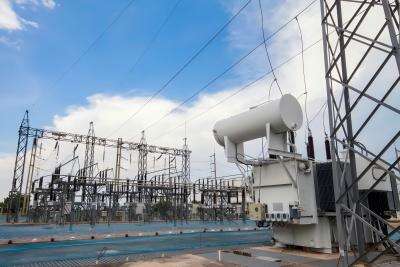
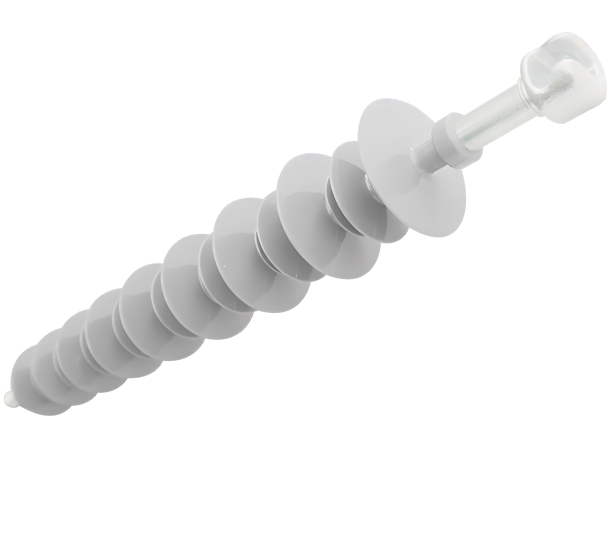
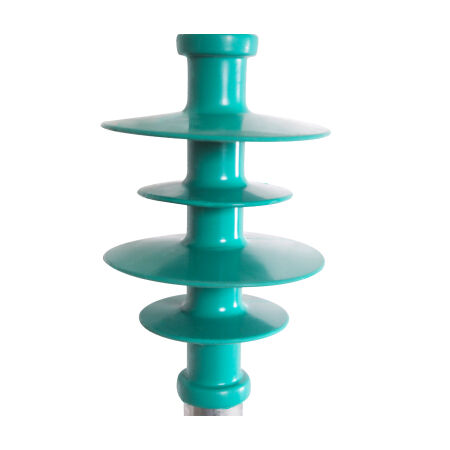
Composite hollow core insulators represent a revolutionary advancement in electrical power transmission and distribution systems, combining cutting-edge materials science with innovative engineering design. These sophisticated electrical components feature a unique hollow cylindrical construction that utilizes advanced composite materials, typically incorporating silicone rubber housings with fiberglass reinforced polymer cores. The hollow core design fundamentally distinguishes these insulators from traditional solid alternatives, providing exceptional mechanical strength while significantly reducing overall weight. The main functions of composite hollow core insulators encompass electrical isolation between conductors and supporting structures, mechanical support for overhead power lines, and protection against environmental factors such as pollution, moisture, and extreme weather conditions. Technologically, these insulators leverage the superior properties of composite materials to deliver enhanced performance characteristics. The silicone rubber housing provides outstanding hydrophobic properties, effectively repelling water and preventing the formation of conductive paths that could compromise electrical safety. The fiberglass reinforced core offers remarkable tensile strength and flexibility, enabling the insulator to withstand substantial mechanical loads while maintaining structural integrity. The hollow construction reduces material usage without sacrificing performance, resulting in lighter components that simplify installation and reduce transportation costs. Applications for composite hollow core insulators span across various sectors of the electrical power industry, including high-voltage transmission lines, distribution networks, substations, and renewable energy installations. These versatile components prove particularly valuable in coastal environments where salt contamination poses significant challenges, urban areas with high pollution levels, and regions experiencing extreme weather conditions. The technology finds extensive use in both new infrastructure projects and replacement applications where upgrading from traditional ceramic or glass insulators becomes necessary for improved reliability and reduced maintenance requirements.

New Products

Composite hollow core insulators deliver numerous practical benefits that directly impact operational efficiency and cost-effectiveness for electrical utilities and industrial facilities. The lightweight construction significantly reduces installation complexity and associated labor costs, as crews can handle these insulators more easily compared to heavier traditional alternatives. This weight reduction also minimizes stress on supporting structures, potentially extending the lifespan of towers and poles while reducing structural requirements for new installations. The superior pollution performance of composite hollow core insulators provides exceptional value in challenging environments. The hydrophobic silicone rubber surface naturally sheds water and contaminants, maintaining electrical performance even in areas with heavy industrial pollution, salt spray, or dust accumulation. This characteristic dramatically reduces the frequency of required cleaning and maintenance, translating to substantial operational savings over the insulator's service life. Vandalism resistance represents another significant advantage, as composite hollow core insulators prove more difficult to damage through gunfire or thrown objects compared to brittle ceramic alternatives. When damage does occur, these insulators often maintain functionality even with surface punctures, providing enhanced system reliability. The flexibility of composite materials enables these insulators to absorb mechanical shocks and vibrations more effectively than rigid alternatives, reducing the likelihood of catastrophic failures during extreme weather events or seismic activity. Installation versatility offers additional benefits, as composite hollow core insulators can accommodate various mounting configurations and environmental conditions without requiring specialized handling equipment. The consistent quality control achievable during manufacturing processes ensures reliable performance characteristics across production batches. Long-term durability reduces replacement frequency, while the non-brittle nature eliminates the safety hazards associated with broken ceramic or glass fragments. Temperature stability across wide ranges maintains electrical and mechanical properties in diverse climatic conditions, from arctic cold to desert heat. These combined advantages result in lower total cost of ownership, improved system reliability, reduced maintenance requirements, and enhanced safety for both installation personnel and the general public.

Tips And Tricks

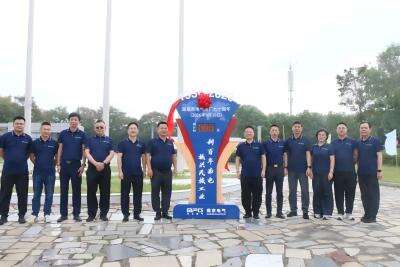
Nanjing Electric Holds Grand 89th Anniversary Celebration

26

Jan

Nanjing Electric Holds Grand 89th Anniversary Celebration

View More
Setting Sail for the World  From Export to Global Expansion, Baiyun Electric Accelerates Its Internationalization

26

Nov

Setting Sail for the World From Export to Global Expansion, Baiyun Electric Accelerates Its Internationalization

View More
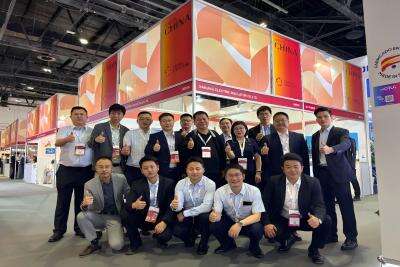
International Exhibition | Nanjing Electric Showcases at Middle East Energy 2025

26

Jan

International Exhibition | Nanjing Electric Showcases at Middle East Energy 2025

View More

Get a Free Quote

Our representative will contact you soon.
Email
Name
Company Name
Message
0/1000

composite hollow core insulators

Revolutionary Hollow Core Design Technology

Revolutionary Hollow Core Design Technology

The innovative hollow core design of composite hollow core insulators represents a paradigm shift in insulator engineering, delivering unprecedented performance advantages through intelligent material optimization. This groundbreaking construction method creates a cylindrical cavity within the insulator core, fundamentally altering the stress distribution patterns and mechanical properties compared to solid designs. The hollow configuration reduces material consumption by up to thirty percent while maintaining or even enhancing mechanical strength characteristics, achieving an optimal strength-to-weight ratio that benefits both manufacturers and end-users. The engineering principles behind this design leverage advanced finite element analysis to ensure that stress concentrations remain well within acceptable limits throughout the insulator's operational envelope. The hollow core structure provides inherent flexibility that allows the insulator to accommodate thermal expansion and contraction cycles without developing internal stresses that could compromise long-term reliability. This design innovation also enables improved manufacturing consistency, as the controlled cavity geometry helps eliminate internal voids and inclusions that sometimes occur in solid composite structures. The hollow configuration facilitates more uniform curing during the manufacturing process, resulting in superior mechanical properties and enhanced quality control. Additionally, the reduced material usage translates directly to environmental benefits through lower resource consumption and reduced transportation energy requirements. The hollow core design contributes to simplified inventory management, as the lighter weight enables more efficient packaging and storage. Field installation teams particularly benefit from the reduced handling requirements, leading to improved safety outcomes and faster project completion times. The design also provides inherent vibration damping characteristics, as the hollow structure can absorb and dissipate energy more effectively than solid alternatives. This feature proves especially valuable in locations subject to high winds or seismic activity, where traditional insulators might experience resonance issues. The hollow core technology represents not merely an incremental improvement, but a fundamental reimagining of insulator design philosophy that prioritizes efficiency, performance, and sustainability while maintaining the rigorous safety and reliability standards required for critical electrical infrastructure applications.
Superior Environmental Performance and Durability

Superior Environmental Performance and Durability

Composite hollow core insulators demonstrate exceptional environmental performance capabilities that surpass conventional insulator technologies across diverse operating conditions and contamination scenarios. The advanced silicone rubber housing material exhibits remarkable hydrophobic characteristics, creating a surface that actively repels water molecules and prevents the formation of continuous water films that could create conductive paths. This hydrophobic recovery property means that even when the surface becomes temporarily contaminated with pollutants or loses its water-repelling characteristics, the material naturally regenerates its hydrophobic properties over time through molecular migration processes. The pollution performance of these insulators excels in coastal environments where salt spray creates highly conductive surface conditions that frequently cause flashovers in traditional ceramic insulators. The smooth surface profile and material composition resist salt accumulation, while the hydrophobic properties prevent the formation of continuous electrolyte films that enable leakage currents. Urban and industrial environments present unique challenges through airborne particulates, chemical emissions, and varying humidity conditions, yet composite hollow core insulators maintain their electrical integrity through superior contamination resistance. The UV stability of modern silicone formulations ensures that prolonged exposure to intense sunlight does not degrade the surface properties or compromise the hydrophobic characteristics essential for pollution performance. Tracking and erosion resistance provide long-term durability advantages, as the composite materials resist the formation of permanent conductive paths even under sustained electrical stress. The material composition inhibits carbon track formation and can self-heal minor surface damage through thermal cycling. Temperature cycling performance exceeds that of rigid insulator materials, as the composite construction accommodates expansion and contraction without developing internal stresses or surface cracks. Seismic performance benefits from the inherent flexibility of composite materials, which can absorb shock loads and vibrations that might shatter brittle alternatives. The non-brittle failure mode ensures that even severe mechanical damage typically results in manageable degradation rather than catastrophic failure, maintaining system safety and reducing emergency response requirements. Chemical resistance properties enable reliable operation in environments with acid rain, industrial emissions, or other corrosive atmospheric conditions that rapidly deteriorate metallic or ceramic components.
Economic and Operational Benefits Throughout Service Life

Economic and Operational Benefits Throughout Service Life

The economic advantages of composite hollow core insulators extend far beyond initial purchase price considerations, delivering substantial value through reduced lifecycle costs and operational efficiencies that compound over decades of service. Installation cost reductions begin immediately upon project initiation, as the lightweight characteristics enable smaller crews to handle installation tasks that would typically require additional personnel or specialized lifting equipment for heavier traditional insulators. The reduced weight also permits the use of lighter transportation vehicles and simplifies logistics planning, particularly for remote installation sites where access limitations constrain equipment options. Construction schedule advantages emerge from faster installation procedures, as composite hollow core insulators require less precise handling and positioning compared to fragile ceramic alternatives. The reduced breakage risk during transportation and installation eliminates costly delays associated with replacement part procurement and rescheduled installation activities. Maintenance interval extensions provide ongoing operational savings, as the superior pollution performance and tracking resistance reduce the frequency of required cleaning and inspection activities. Traditional ceramic insulators in contaminated environments may require annual or bi-annual cleaning to maintain adequate performance, while composite hollow core insulators can often operate for multiple years between maintenance cycles without performance degradation. The vandalism resistance characteristics translate to reduced replacement costs and improved system reliability, particularly valuable for utilities serving areas with recurring insulator damage incidents. Emergency response costs decrease significantly, as the non-brittle failure characteristics of composite materials reduce the likelihood of catastrophic failures that require immediate repair crews and system outages. The lighter weight facilitates stockpiling of replacement units, enabling utilities to maintain smaller inventory quantities while still ensuring adequate spare parts availability. Training costs for installation and maintenance personnel decrease due to the more forgiving handling characteristics and reduced safety hazards associated with composite materials. Insurance benefits may apply in regions prone to seismic activity or severe weather, as the superior shock absorption and flexibility of composite hollow core insulators can reduce system vulnerability and associated risk premiums. The extended service life typical of quality composite insulators, often exceeding twenty-five years in demanding environments, provides superior return on investment compared to alternatives requiring more frequent replacement. Environmental compliance benefits include reduced waste generation and simplified disposal procedures, as composite materials typically present fewer environmental concerns compared to ceramic or glass alternatives containing potentially hazardous materials.

Get a Free Quote

Our representative will contact you soon.
Email
Name
Company Name
Message
0/1000
Newsletter
Please Leave A Message With Us